
It is time for us to leave India and journey onto our next destination, Thailand, where we will spend over a month and will be meeting Justin's uncle who is also visiting at the same time with his Thai wife. We even tracked down the date of the next infamous
Full Moon party in Ko Phangan (October 26) where thousands gather on the white sand beach and party for five nights under a bright full moon.
This past month and a half here in India has drastically evolved our thoughts on traveling. Originally we had plans to be in the glory of the Taj Mahal, trek in the Himalayas, visit Mumbai (Bombay) and other "must see" tourist traps. Instead we took a spiritual journey to Pune and a yoga course, while allotting ample time to spend with Justin's extended family, dine at local restaurants, hone my blog writing skills, play badminton in the backyard, go grocery shopping, and participate in
Navratri, one of India's biggest festivals. We also got to see first-hand how India with all the ingredients of modernism has one foot dipped in a high-tech society and another firmly planted in the old world where you still see women carrying big pots on their heads - a country that is simultaneously straddling several centuries. We were able to truly live in India not as site-hopping tourists but as honorary members of their society. Furthermore, being foreigners sometimes gave us special benefits even though rickshaw drivers and street vendors always charge more for non-Indians. For instance, when we attended Malu's dance performance, we walked past rows and rows of seats and were escorted to sit front row in the VIP section where our pictures were taken just because we were foreigners. We also went to a popular restaurant for lunch where the wait was two hours long, but Justin's aunt walked right up to the host and said we visited all the way from America. We were seated within seconds.
Although we didn't get to check off any of those items on our now-defunct itinerary, the enriching experience and cultural lessons we are taking back with us are infinitely more meaningful and memorable. It is like the difference between studying abroad while staying with a host family versus backpacking for the summer. I'd much prefer the former option because you get to be totally immersed in their culture rather than stand in front of some revered monument with your picture taken. You also eat where the locals do and not what
Rough Guide recommends, adapt to their lifestyle rather than impose your stubborn ways on others wherever you go. This to us is what traveling is all about...
Here's our photo album, a final look at our journey to India:


L: Gandhi Ashram where we got to relive this nation's father's lifelong struggle to bring independence and peace to India.
R: Monkey in our backyard - I've seen a menagerie of animals wandering the streets here without even stepping foot in a zoo.


L: Our painfully long 15-hour train ride to Pune - the train seats become beds and the impoverished take dumps on the railroad tracks where they live nearby.
R: Statues of Ganesh being sold on the street - they are not only used for prayers but also a popular way to transport drugs.


L: Fruit market selling fruits I've never even heard of (like custard apples and sweet limes) which we enjoyed every day - even mangoes come in hundreds of varieties.
R: Enjoying a home cooked Indian meal where we use steel plates and eat with our hands.


L: Justin playing a game of carrom with Baba and Shimul.
Carrom is a tabletop game and also a popular pastime in India.
R: Neighborhood kids I've befriended showing me the temple they built in the parking lot. They were later told to build it somewhere else because it occupied a parking spot.


L: Three cute little girls dressed for
NavratriR: Our final night in India where we danced for hours

 Last night my friend from college, Alvin, treated me to a really good local seafood restaurant for dinner in Jordan (left pic), somewhere I never would've found on my own. With my new glasses, we looked like twins, except his frames were Versace and mine are Ver-sase. Then we browsed through Temple Street (Meew Gai or sometimes called Men's Market) where they sell tons of knick knacks and offer fortune telling services (right pic). We even found a couple middle- aged prostitutes soliciting business. I tried to take a picture discreetly but the hookers didn't turn out very well.
 Temple Street is famous for fortune telling and tarot card reading, so I had to get my fortune told at the least expensive booth: only HK$100 ($12) for face and palm reading. Amazingly, a lot of what he said about my character, lifestyle, childhood, etc. was right on the money - like how everyone thinks I'm a big airhead when in fact I'm really intelligent with lots of ideas. He also said I already had one failed significant relationship or marriage and could possibly have three marriages in my lifetime. My first marriage was not a harmonious one while my second marriage will be a very happy one. But if I marry a third time (good god - who am I, JLo?), I will have a shitload of money. Sorry Your Baldness [aka Justin my boyfriend], looks like I'll be leaving you for money! He also said I have Toe Fah which means I easily attract men. Everything else he said about my future and fortune, well that's between me and him, and of course Alvin who was there for moral support and occasional translation. Twelve bucks for half an hour of entertainment, not bad at all! Except he said I should remove the three small moles on my face. His exact words were (translated from Chinese), "You have such a pretty face but with those moles, it's like having trash all over it. And it wouldn't hurt to lose a few pounds." Thanks Mr. Fortune Teller. Just what every girl wants to hear!
 Afterwards we went to some hole in the wall for dessert that was excellent. Alvin had a mango tapioca and gave me half, and I had a black sesame tofu and did not give him half. Then we went back to his luxury apartment sitting on top of Elements shopping center with a breathtaking view of the city (HK lies to build apartment complexes right above shopping centers). But you'll have to excuse the mess in the pictures - his maid doesn't come til tomorrow.


 It is very easy to get from one region to another as you can go by boat, metro, train, or bus. Yesterday I met up with four new friends (introduced by Thomas) and we shopped and ate all day in Tsim Sha Tsui and Mong Kok. Today I'm going to Sha Tin to pick up my glasses - turns out I've been using my left eye this whole time instead of both eyes, so my right eye has deteriorated dramatically and now I need glasses to train myself to see out of both eyes. I now look like Chinese Millhouse.


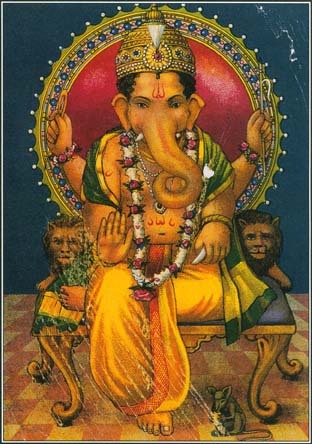 Athiests deny the existence of God while agnostics neither believe nor deny any divine beings. Siding with the latter has provided many benefits in my life. For example, I don't have to go to church every Sunday, or confess my sins to a sanctimonious pedophile, I mean, priest, or pray five times a day, or fast for a month, or not work after sun down, or give something up for 40 days, or be prohibited to consume certain foods, etc., etc., etc. The list of personal conveniences goes on and on. I know most of you must be appalled by my iconoclastic views, and I respect that. But you also have to respect that you have your religious beliefs and rituals, and well, I don't have mine.


 If you've been bit by the travel and foody bug as I have, you must have noticed that each country proffers a myriad of new and different flavors when it comes to satisfying your sense of taste. It can be overwhelming when presented with abounding choices you've most likely never heard of. International food companies and local restaurants cater to each country according to the types of foods available, religious beliefs, and regional tastes. For example, Dole makes pineapple soft serve ice cream only in Hawaii, whereas McDonald's in Malaysia sells durian milkshakes. Sugar cane and jack fruit juices are ubiquitous in Singapore, while Japan offers green tea as a flavor for everything imaginable from desserts to bread to noodles.


